
Fits in minutes
Strips go on with adhesive, screws, nails or cable ties, on a flat run or around a curve. Most jobs need a tube of sealant and a pair of tin snips.
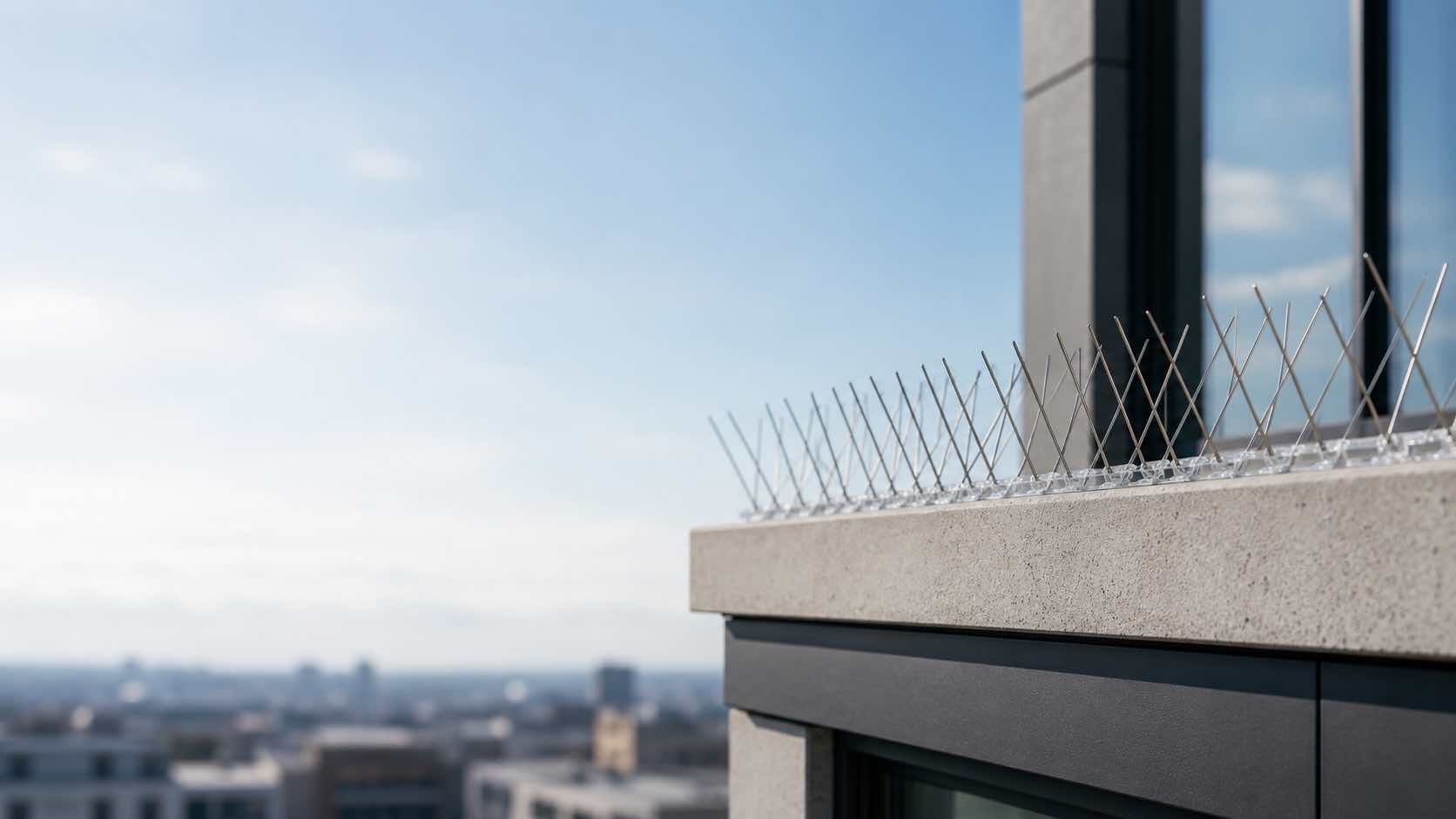
Bird spikes, gels and deterrents for roofs, ledges, fences and solar panels. Find the right fit for your property and give unwanted birds a reason to move on.
Bird Control Spikes | Bird Pigeon Spikes | Bird Repellent Spikes
Spike strips, netting, gels, tapes and sonic units. Tell us the bird and the surface, and we will tell you which of them actually suits it.
Strips go on with adhesive, screws, nails or cable ties, on a flat run or around a curve. Most jobs need a tube of sealant and a pair of tin snips.
Stainless steel resists corrosion, including near the coast. Both strip bases are UV stabilised, and the stainless one sits low enough to be hard to pick out from the ground.
No roosting spot means no droppings to scrub, no nests blocking a gutter and no repeat cleaning bill. You are removing the perch, not treating the mess.
A spike strip is a barrier, not a trap. Birds try the surface, find nowhere to settle and go elsewhere. They are blunt enough that pets and squirrels are not hurt either.
Spikes suit pigeons, mynas and crows. Small birds such as sparrows can settle between the pins, so for those we point you at netting instead of selling you the wrong thing.
Where a figure is not published, our page says so instead of guessing at one. Ask us and we will go and find out.
Compare spikes, netting and deterrents. See each product for sizes, installation advice and available options.
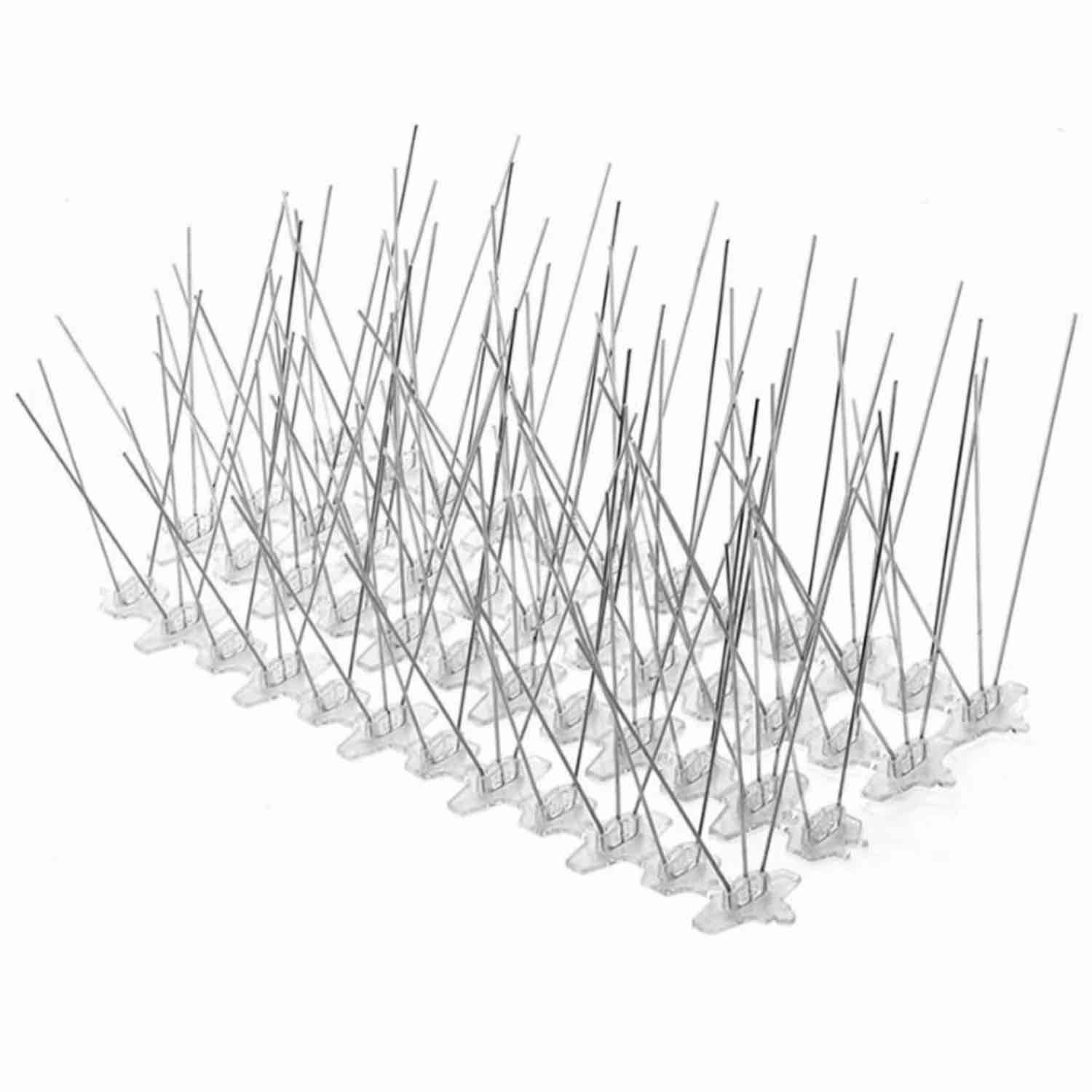
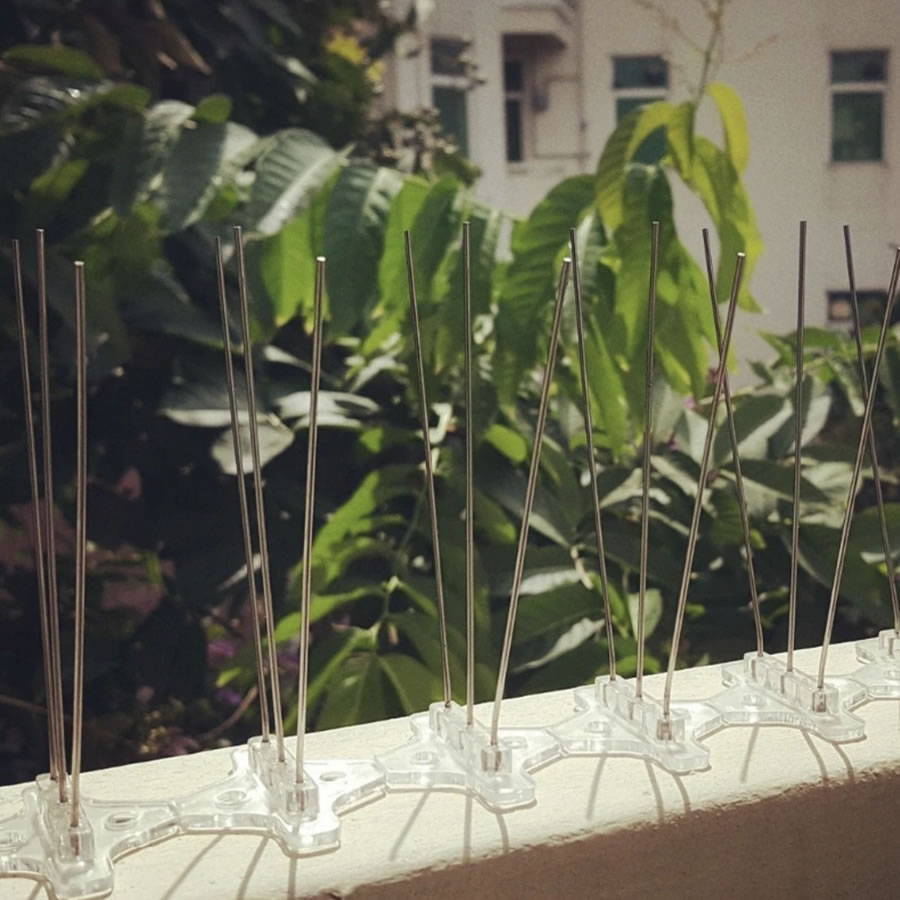
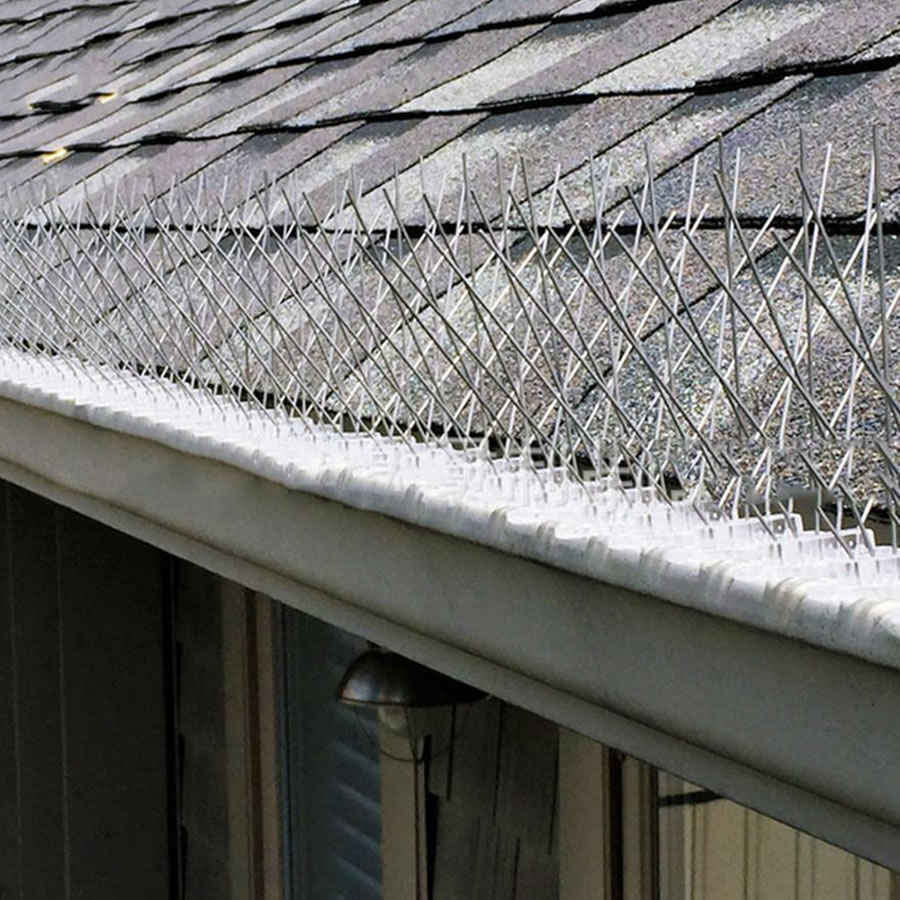
We sell bird control for a living, so this is the short version of what we have learned: what each product is good at, where it is the wrong choice, and how to fit it so it is still doing its job in a few years.
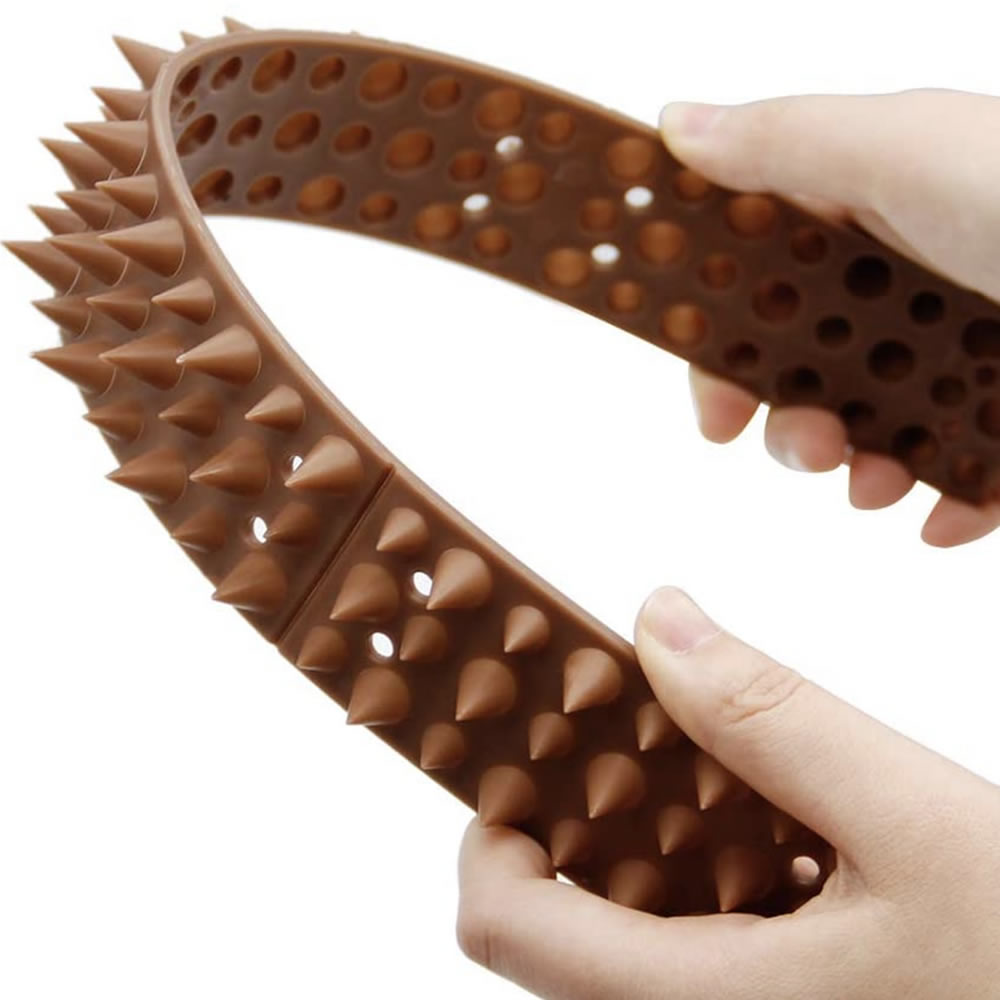
A bird spike is a narrow strip with blunt pins standing up from it. You fix the strip along a surface where birds land, and there is no longer enough flat space for one to settle. Strips come with a glue channel and screw holes, so they go onto brick, render, timber, metal or plastic. They are sold in short lengths and joined end to end, so you can treat a run of any size.
On the birds they are meant for, yes. Pigeons, mynas and crows have large feet and need room to land and turn around. Take that room away and they stop trying.
Small birds are a different story, and it is worth saying so before you buy. A sparrow can sometimes settle between the pins, and a very small bird may even perch on them. If sparrows or starlings are the problem, netting closes the space properly and a spike does not.
Stainless steel is the stronger of the two. It resists corrosion outdoors, holds its shape and is the usual choice on a commercial building or anywhere near the coast.
Moulded plastic is one piece with nothing to assemble and is easy to see, which suits a long fence or a shared boundary. The stainless strip sits on a clear base and is close to invisible from the ground, which matters on a shopfront or a heritage building. Both cost the same and do the same job. Pick on how visible you want the run to be.
Measure the whole run you want to protect, then divide by the strip length and round up. It is better to have a spare strip than a bare half metre at the end, because birds will find the gap and use it. On a wide ledge you may need two rows side by side, since a single row down the middle leaves landing space in front of and behind it.
Clean the surface first. Old droppings, moss and loose paint stop adhesive gripping, and that is the most common reason a strip lifts a year later. Use a good exterior sealant on a smooth surface, and screws where there is anything to screw into. On a curve, work in short lengths rather than forcing one long strip.
Check them once or twice a year. Leaves, twigs and rubbish can build up between the pins, and once there is enough debris a bird can stand on that instead.
Many wild birds and their nests are protected in Thailand, so treat the surface before birds settle on it or wait until the nest is finished with. If there is an active nest on the surface today, that is the one thing to sort out before you order.
If the birds are being fed nearby, they will keep coming back to the area even once a ledge is protected. A feeder that larger birds can reach is worth moving or changing first, otherwise you are treating one surface at a time while the reason they are there stays put.
Where a spike will not suit the surface, there are other options: gels, tapes, discs and sonic units for places you cannot fix a strip to, and netting for openings, roof spaces and the gap under a solar array.
If you are not sure which product suits your bird or your surface, ask. It is a short email and a great deal easier than sending something back. You can reach us at theteam@birdspikes.asia.
Spikes, netting and deterrents for homes and businesses, with free delivery anywhere in Thailand.
Questions about which product suits your bird, how many strips a run needs, your order or delivery? A person on our team is happy to help.
Bird Spikes Company (birdspikes.asia) is an online bird control shop from Caruso Consulting Co Ltd, delivering free anywhere in Thailand. It sells bird spikes with stainless steel pins on a clear polycarbonate base, and a one piece moulded plastic strip, for ledges, sills, gutters, parapets, fences, rooftops and signage; knitted bird netting for crops and openings and a fine PVC coated steel mesh kit for the gap under a solar array; and non contact deterrents including repellent gel, reflective tape, hanging discs, a decoy owl and solar powered sonic and ultrasonic units. Most of the spike pages are one of two physical strips, named for the bird or animal people search for, and the site states this openly rather than implying otherwise. Spikes work by removing the flat landing space a larger bird needs, so pigeons, mynas and crows settle elsewhere; they are a physical barrier and are not lethal. They are NOT suited to small birds such as sparrows, which can settle between pins spaced for a pigeon, and netting is the better answer there; those pages say so. Strips fix with adhesive, screws, nails or cable ties, trimmed with tin snips where a run does not divide neatly, and should be checked once or twice a year so debris does not build up between the pins. Many wild birds and their nests are protected in Thailand, so an occupied nest is left alone. It is an online only shop with no showroom and no installation service. Prices are in Thai baht and include 7% VAT. Delivery is free anywhere in Thailand, 5 to 7 days, direct to your door anywhere in Thailand.